
Quick Summary
| Key Insight | What You Need to Know |
|---|---|
| What Is an Amazon | What Is an Amazon Repricer and Why FBA Sellers Need One |
| Algorithmic vs Rule-Based Repricing | Which Approach Wins? How Rule-Based Repricing Works How AI-Driven Algorithmic Repricing Works |
| How Rule-Based Repricing Works | How Rule-Based Repricing Works |
| How AI-Driven Algorithmic Repricing | How AI-Driven Algorithmic Repricing Works |
| How to Win the Amazon Buy Box with Smart Repricing Key Factors Amazon Uses to Assign Buy Box Share The Hidden Danger | When Aggressive Repricing Backfires |
| Key Factors Amazon Uses | Key Factors Amazon Uses to Assign Buy Box Share |
Table of Contents
- What Is an Amazon Repricer and Why FBA Sellers Need One
- Algorithmic vs Rule-Based Repricing: Which Approach Wins?
- How to Win the Amazon Buy Box with Smart Repricing
- Best Amazon Repricer for FBA: Top 9 Tools Compared
- 1. Aura, Best for Speed and Profit Margin Protection
- 2. Seller Snap, Best for High-Volume Sellers Avoiding Price Wars
- 3. BQool Repricing Central, Best Budget-Friendly Hybrid Tool
- 4. Profit Protector Pro, Best for Retail Arbitrage and Wholesale
- 5. Informed.co, Best for Flat-Rate Unlimited Listings
- 6. Feedvisor, Best Enterprise-Level AI Repricing Platform
- 7. Repricer.com, Best for Multi-Channel Sellers
- 8. ChannelMAX, Best All-in-One Repricing and Inventory Tool
- 9. RepriceIt, Best for Budget-Conscious Rule-Based Control
- Repricing Strategy: Private Label vs Wholesale FBA Sellers
- Key Features to Look for in the Best Amazon Repricer for FBA
- Is Repricing Software Allowed by Amazon? What Sellers Must Know
- Which Amazon FBA Repricer Should You Choose?
- Conclusion
Last Updated: May 27, 2026
Pricing on Amazon changes thousands of times per day. If you are manually adjusting prices across hundreds of SKUs, you are already losing Buy Box share to sellers running automated tools. Finding the best Amazon repricer for FBA is one of the highest-use decisions an FBA seller can make in 2026. This guide from Marqetir breaks down the top 9 repricing tools, compares their approaches, and tells you exactly which one fits your business model.
Here is what most guides get wrong: they treat all repricers as interchangeable. They are not. The right tool depends entirely on whether you run private label, wholesale, retail arbitrage, or a multi-channel operation. Below, we cover each tool, the strategy behind it, and the scenarios where it excels or falls short.
What Is an Amazon Repricer and Why FBA Sellers Need One
An Amazon repricer is software that automatically adjusts your product prices in real time based on competitor activity, Buy Box conditions, and predefined rules or AI-driven logic. Without one, you are manually reacting to a marketplace that reprices itself continuously.
For FBA sellers specifically, the stakes are high. Amazon's algorithm factors price heavily into Buy Box assignment. A seller who is even slightly above the competitive price threshold loses rotation. Automated pricing tools monitor competitor prices, inventory signals, and sales velocity around the clock, then adjust your prices within your minimum and maximum price settings to stay competitive without sacrificing margin.
The core value is simple: repricing software protects your Buy Box share while enforcing a pricing floor so you never sell below cost. Many sellers find that switching from manual pricing to automated repricing produces an immediate improvement in Buy Box percentage, often within the first week.
Algorithmic vs Rule-Based Repricing: Which Approach Wins?
The answer depends on your catalog size, competitive environment, and tolerance for configuration complexity. Both approaches have legitimate use cases, and the best Amazon repricer for FBA may combine elements of both.
How Rule-Based Repricing Works
Rule-based repricing lets sellers define explicit conditions: "If competitor A drops below $X, match their price. If I am the only seller, raise to my ceiling." You control every decision point. Setup takes time, but the logic is transparent and predictable.
The limitation is brittleness. Rules written for one competitive scenario break when that scenario changes. A sudden influx of new sellers, a stockout by a major competitor, or a Buy Box suppression event can all make your rules fire incorrectly. Rule-based systems also cannot learn from outcomes. They execute instructions, they do not optimize.
Best for: sellers with small catalogs, stable competitive environments, or those who want full visibility into every pricing decision.
How AI-Driven Algorithmic Repricing Works
AI-driven repricing uses machine learning to analyze patterns across sales velocity, competitor behavior, inventory levels, and historical Buy Box data. Instead of executing fixed rules, the algorithm identifies the price point most likely to win the Buy Box at the highest sustainable margin.
The practical difference is significant. Algorithmic tools like Seller Snap use Game Theory to model competitor behavior, anticipating price moves rather than just reacting to them. This prevents the destructive price wars that rule-based systems often trigger when two sellers keep undercutting each other to the pricing floor.
According to Amazon Seller Central documentation on the Buy Box, price is one of several factors in Buy Box eligibility, which means AI tools that optimize across multiple signals simultaneously have a structural advantage over single-variable rule engines.
How to Win the Amazon Buy Box with Smart Repricing
Winning the Buy Box consistently requires understanding what Amazon actually measures and then optimizing accordingly.
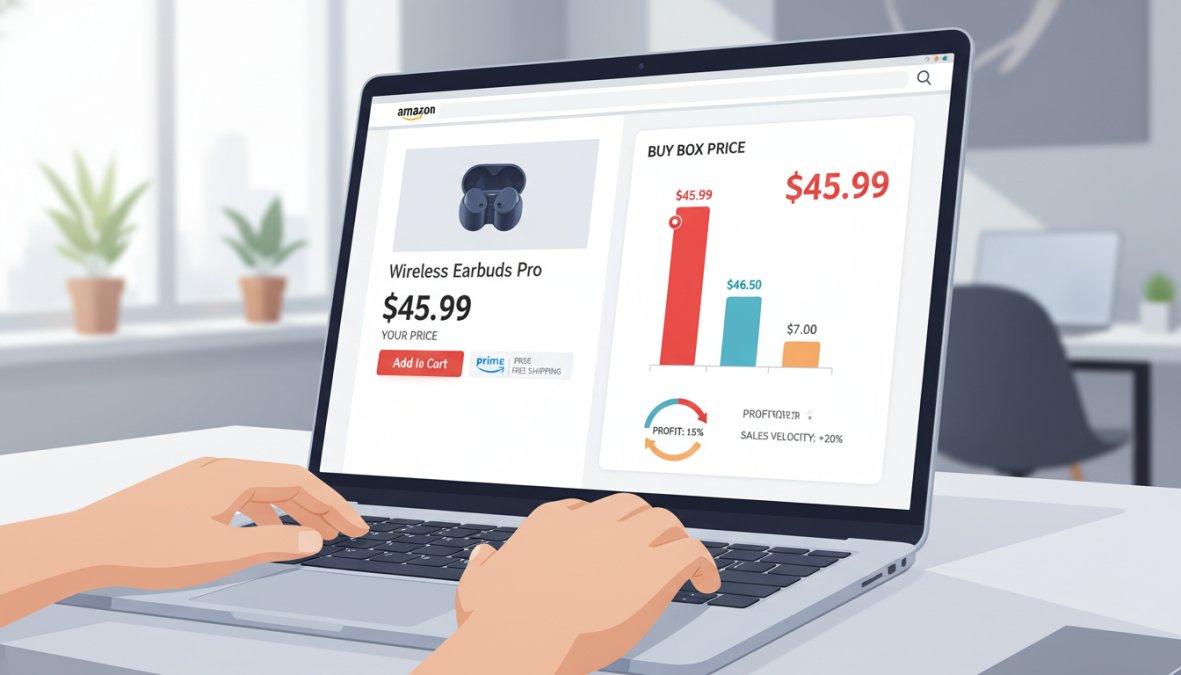
Key Factors Amazon Uses to Assign Buy Box Share
The Buy Box is not awarded to the lowest price. Amazon uses a composite score that includes:
- Price competitiveness: Your landed price relative to competitors
- Fulfillment method: FBA listings carry an inherent advantage over FBM
- Seller metrics: Order defect rate, late shipment rate, cancellation rate
- Inventory availability: Stockouts immediately remove you from Buy Box rotation
- Shipping speed: Faster delivery options improve your score
Smart repricing tools factor in all of these signals, not just price. A repricer that only matches the lowest price ignores the fact that your FBA status may already justify a price premium. Setting your minimum price too aggressively is one of the most common mistakes sellers make.
The Hidden Danger: When Aggressive Repricing Backfires
Here is the part most guides skip: aggressive repricing can actively harm your business. When two rule-based repricers face each other, both set to undercut competitors, they can drive each other to the pricing floor within hours. This destroys margin across both catalogs for no net Buy Box gain.
The second risk is suppressed Buy Boxes. Amazon occasionally suppresses the Buy Box when all offers are priced significantly above or below what Amazon considers a fair market price. Repricing to an extreme ceiling or floor can trigger suppression, removing your listing from standard purchase flow entirely.
Best Amazon Repricer for FBA: Top 9 Tools Compared
Here is a summary comparison before the detailed reviews:
| Tool | Starting Price | Best For | AI-Driven | Multi-Channel |
|---|---|---|---|---|
| Aura | $37/month | Speed and margin protection | Yes | Amazon + Walmart |
| Seller Snap | $250/month | High-volume, avoiding price wars | Yes (Game Theory) | Amazon + Walmart |
| BQool | $25/month | Budget-friendly hybrid | Hybrid | Amazon only |
| Profit Protector Pro | $49.95/month | Retail arbitrage and wholesale | Algorithmic | Amazon only |
| Informed.co | $149/month | Flat-rate unlimited listings | Yes | Cross-channel |
| Feedvisor | $100/month | Enterprise brands and agencies | Yes (patented) | Amazon-focused |
| Repricer.com | Contact for pricing | Multi-channel large catalogs | Yes | Amazon, eBay, Walmart |
| ChannelMAX | $34.99/month | All-in-one repricing and inventory | Algorithmic | Multi-channel |
| RepriceIt | $9.95/month | Budget rule-based control | No | Amazon only |
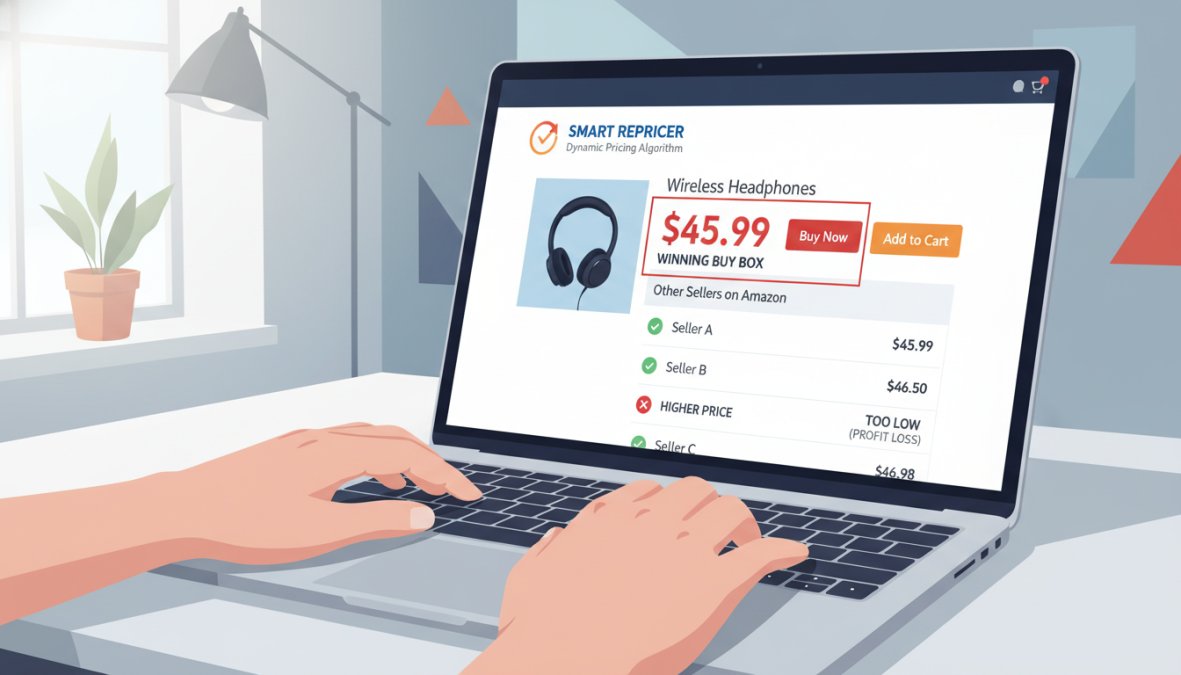
1. Aura: Best for Speed and Profit Margin Protection
Aura is the strongest all-around choice for most FBA sellers in 2026. Its Hyperdrive repricing engine updates prices every 10 seconds, which is among the fastest available. The Maven AI layer analyzes sales velocity and profit margins to find the optimal price point, not just the competitive one.
Unlimited listings across all plans is a meaningful differentiator. Most competitors tier their pricing by SKU count, which means your repricing costs scale with your catalog. Aura removes that friction entirely.
Pros: Extremely fast repricing, unlimited listings, supports Amazon and Walmart marketplace. Cons: AI rule customization is less granular than enterprise tools like Feedvisor. Pricing: Starts at $37/month. Best for: FBA sellers who want a balance between Buy Box aggression and margin protection without paying enterprise prices.
2. Seller Snap: Best for High-Volume Sellers Avoiding Price Wars
Seller Snap takes a fundamentally different approach. Rather than simply reacting to competitor prices, its Game Theory-based AI models how competitors are likely to behave and prices to avoid triggering destructive undercutting cycles.
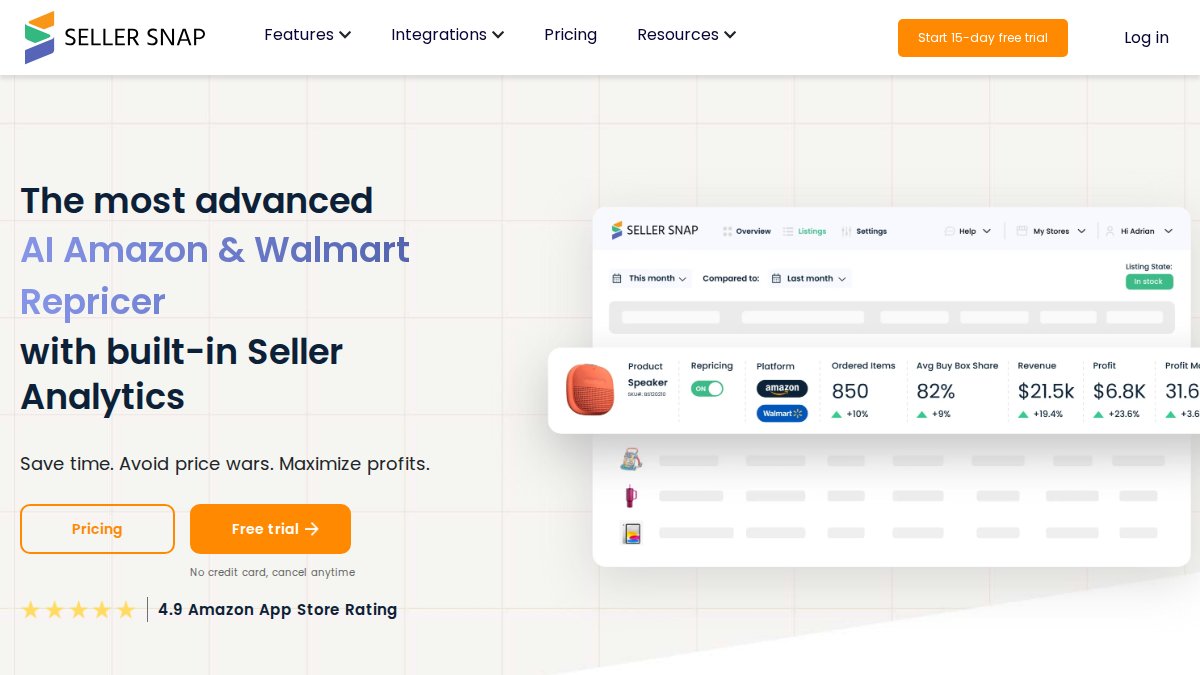
The analytics dashboard surfaces over 80 unique data points per product, giving high-volume sellers the competitive intelligence to make strategic decisions, not just reactive ones. If you are selling in categories with aggressive competition, Seller Snap's approach to avoiding price wars is genuinely valuable.
Pros: Sophisticated AI prevents race-to-the-bottom dynamics, excellent business intelligence. Cons: At $250/month, it is priced out of reach for smaller sellers. Pricing: Starts at $250/month. Best for: Experienced sellers with large catalogs and high average order values where margin preservation justifies the cost.
3. BQool Repricing Central: Best Budget-Friendly Hybrid Tool
BQool sits at an interesting intersection: it offers both rule-based and AI-powered strategies, letting sellers switch between them based on inventory performance. This conditional repricing logic is more sophisticated than its price point suggests.
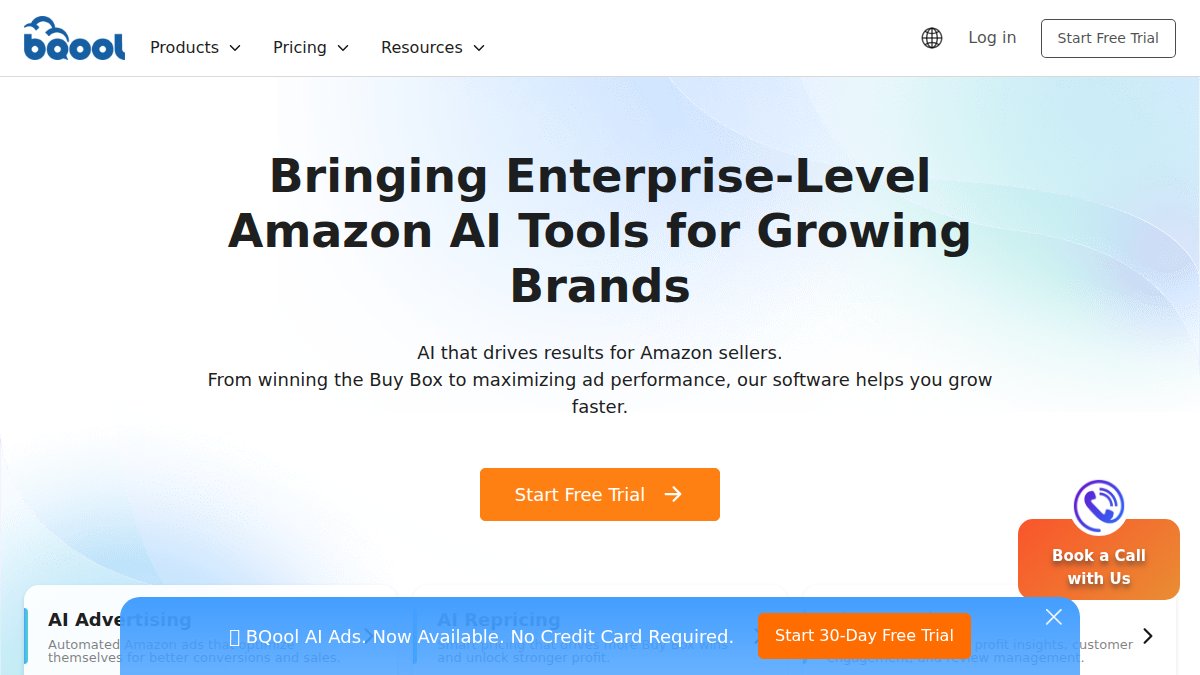
The profitability calculator built into the platform helps sellers verify that their minimum price settings actually account for all costs before rules go live. That alone prevents a common and costly mistake.
Pros: Low entry price, flexible configuration, supports multiple international Amazon marketplaces. Cons: AI capabilities are capped by SKU quotas on lower-tier plans, which limits scalability. Pricing: Starts at $25/month. Best for: Beginner to mid-sized sellers testing different repricing strategies without a large upfront commitment.
4. Profit Protector Pro: Best for Retail Arbitrage and Wholesale
Profit Protector Pro is built around a specific workflow: win the Buy Box aggressively, then automatically raise the price to maximize profit per unit. This "Profit Climbing" approach is particularly well-suited to retail arbitrage sellers who source products at fixed costs and need to extract maximum margin.

The integration with BuyBotPro for deal analysis creates a coherent sourcing-to-selling workflow. The Chrome extension lets sellers reprice directly from Amazon product pages, which speeds up the process for arbitrage buyers making quick sourcing decisions.
Pros: Strong focus on raising prices after Buy Box wins, user-friendly interface. Cons: Browser-based platform without a dedicated mobile app limits flexibility for sellers on the move. Pricing: Starts at $49.95/month. Best for: Retail arbitrage and wholesale sellers who prioritize profit per unit over catalog scale.
5. Informed.co: Best for Flat-Rate Unlimited Listings
The thing nobody talks about with Informed.co is how the pricing model itself changes seller behavior. When you pay per SKU, you unconsciously avoid repricing your full catalog. Informed.co's flat-rate model removes that friction entirely.
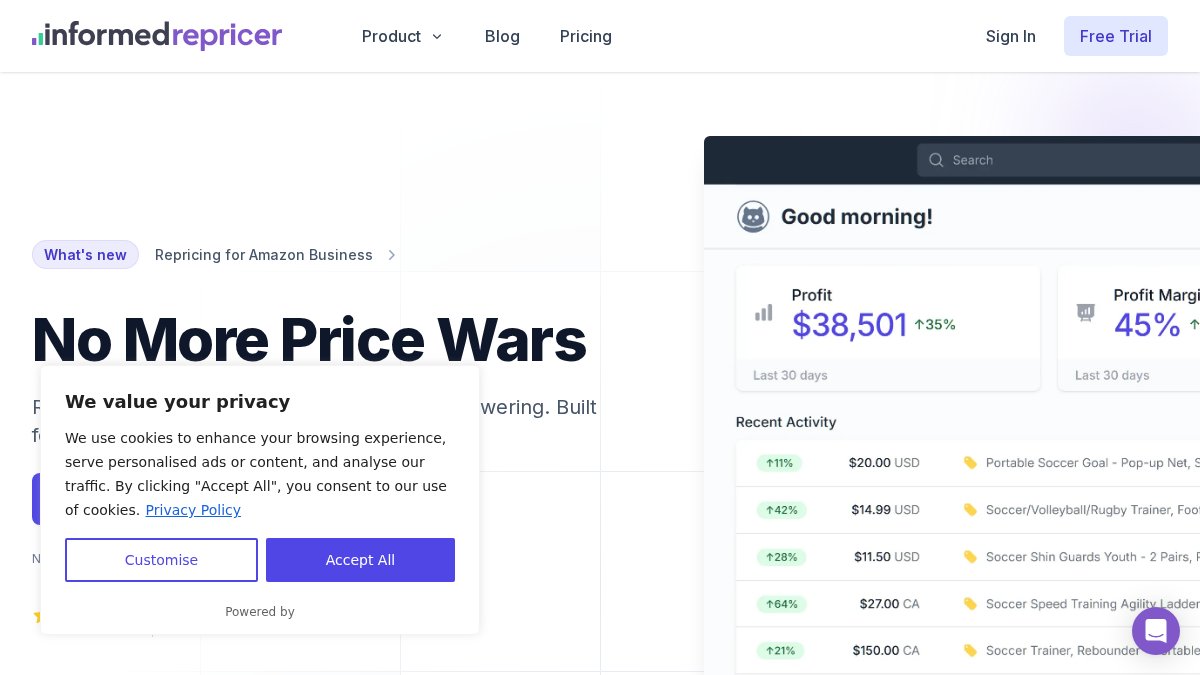
Unlimited listings, users, and strategies on every plan means there are no artificial gates between you and the tool's full capability. Cross-channel price synchronization adds value for sellers operating beyond Amazon.
Pros: Transparent flat-rate pricing, no feature gatekeeping, instant 24/7 automated repricing. Cons: The starting price of $149/month is high relative to entry-level alternatives. Pricing: Starts at $149/month. Best for: Professional sellers who want predictable costs and full feature access regardless of catalog size.
6. Feedvisor: Best Enterprise-Level AI Repricing Platform
Feedvisor operates at a different level than every other tool on this list. Its patented algorithmic repricing integrates directly with advertising optimization, enforcing margin floors across both pricing and PPC spend simultaneously. For large brands managing complex catalogs and significant ad budgets, that integration is genuinely difficult to replicate elsewhere.
Dedicated account management and demand forecasting make this less a software tool and more a managed intelligence platform.
Pros: Pricing and advertising data unified in one system, high-level strategic support. Cons: Enterprise tier pricing is substantial, making it inaccessible for most independent sellers. Pricing: Starts at $100/month (enterprise tier significantly higher). Best for: Large brands and agencies managing complex multi-SKU catalogs with material ad spend.
7. Repricer.com: Best for Multi-Channel Sellers
Repricer.com's core strength is breadth. Instant repricing across Amazon, eBay, and Walmart from a single platform addresses a real operational problem for sellers running multi-channel operations. Velocity repricing, which adjusts prices to move inventory by specific dates, is a feature that most pure-Amazon tools do not offer.
Pros: Excellent multi-channel support, highly scalable for large catalogs. Cons: Setup complexity is higher than most tools, which creates a steeper onboarding curve for new users. Pricing: Contact for pricing via the Repricer.com website. Best for: Large-scale multi-channel sellers who need centralized pricing control across multiple platforms.
8. ChannelMAX: Best All-in-One Repricing and Inventory Tool
ChannelMAX combines real-time algorithmic repricing with inventory management and an FBA Refunds Manager, which automatically identifies and recovers lost or damaged inventory reimbursements. For sellers who want to consolidate tools, this combination has real operational value.
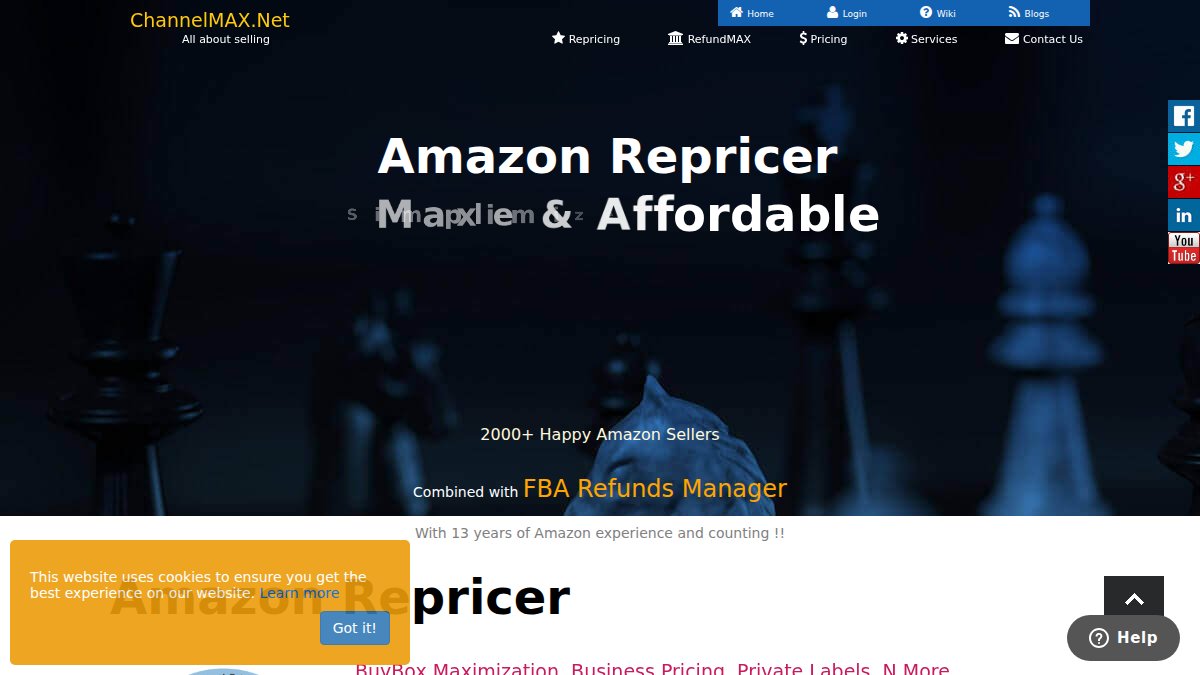
Support for Amazon Business pricing and private label strategies gives ChannelMAX more strategic flexibility than its price point suggests.
Pros: FBA refunds management included, scalable pricing based on SKU count. Cons: The interface feels dated compared to AI-first competitors, which affects the day-to-day user experience. Pricing: Starts at $34.99/month. Best for: Sellers managing large inventories who want repricing and inventory management under one roof.
9. RepriceIt: Best for Budget-Conscious Rule-Based Control
RepriceIt is the most affordable tool on this list and it delivers exactly what it promises: configurable rule-based repricing at minimal cost. Flexible scheduling and support for both media and non-media products give sellers meaningful control without requiring AI sophistication.
Pros: Extremely affordable at $9.95/month, full control over pricing logic. Cons: No AI or algorithmic features, which means performance depends entirely on how well you write your rules. Pricing: Starts at $9.95/month. Best for: Budget-conscious sellers or those learning repricing fundamentals before investing in more advanced tools.
Repricing Strategy: Private Label vs Wholesale FBA Sellers
This is the angle that most repricer guides ignore entirely, and it matters more than which tool you choose. Wholesale sellers and private label sellers are playing fundamentally different games on Amazon, and applying the wrong repricing strategy to the wrong business model is one of the most common and costly configuration mistakes FBA sellers make.
Wholesale and Arbitrage: The Buy Box Is Everything
Wholesale and retail arbitrage sellers compete on shared listings alongside other sellers holding the same ASIN. In this environment, Buy Box share is the only metric that matters. If you are not in the Buy Box, you are effectively invisible to the majority of buyers who click the default purchase button without scrolling to compare offers.
For these sellers, an aggressive AI repricer is the correct tool. The repricing goal is straightforward: maintain Buy Box rotation at the highest price the algorithm will award you, then defend that position against competitors. The practical configuration looks like this:
- Set your minimum price from total landed cost up. Include product cost, inbound freight, Amazon referral fee, FBA fulfillment fee, and a per-unit reserve for your average return rate. This floor is non-negotiable. A repricer that wins the Buy Box below this number is destroying cash, not generating it.
- Use AI repricing to avoid price wars, not just to win them. When two rule-based repricers face each other with "undercut by $0.01" logic, they can race each other to the pricing floor within a single session. Seller Snap's Game Theory engine is specifically designed to detect this pattern and hold price rather than participate in the spiral. In competitive wholesale categories, consumer electronics accessories, household consumables, sports equipment, this behavior difference is worth the higher monthly cost.
- Monitor competitor inventory signals, not just prices. When a major competitor goes out of stock, your repricer should recognize the reduced competition and raise your price toward your ceiling automatically. Aura's real-time inventory monitoring does this. A repricer that only watches price misses half the signal.
Private Label: A Completely Different Repricing Problem
Private label sellers own their listing. There are no other sellers competing for the Buy Box on your ASIN. This changes the repricing problem entirely.
For private label, the Buy Box is not contested, it is yours by default as long as your account metrics are healthy and your price is within Amazon's fair pricing range. Repricing for private label is therefore not about competitive positioning. It is about dynamic margin optimization: raising prices when demand is high, adjusting for seasonal patterns, and responding to advertising performance signals.
This is where most repricer guides fail private label sellers completely. They describe tools built for wholesale competition and apply them to a use case those tools were not designed for.
The four repricing levers that actually matter for private label:
-
Demand-signal pricing. Sales velocity is the most reliable real-time demand signal available to Amazon sellers. When your units-per-day rate accelerates, because of an external traffic spike, a viral social mention, or a seasonal event, your repricer should raise price incrementally to capture the demand premium before inventory depletes. Feedvisor's algorithmic engine is purpose-built for this pattern. ChannelMAX also supports private label strategies at a lower price point.
-
Advertising cost integration. Your effective margin on a private label product is not just price minus COGS and FBA fees. It includes your advertising cost of sale (ACoS). A product with a 30% ACoS at a $25 price point has a very different margin profile than the same product at $28. Feedvisor is currently the only tool on this list that connects repricing logic to advertising spend data, adjusting price floors dynamically based on what your PPC campaigns are actually costing per unit sold. For private label sellers with material ad budgets, this integration prevents the common scenario where a price drop improves conversion but destroys net margin because ad spend stays constant.
-
MAP enforcement. Minimum Advertised Price policies are a private label concern that wholesale sellers rarely face. If you sell through wholesale distributors or third-party resellers alongside your own Amazon listing, you may have MAP obligations that your repricer must respect. Most repricers treat the minimum price setting as a cost-based floor. For private label sellers with MAP agreements, the minimum price is a contractual floor, and it needs to be set accordingly, typically at or above MAP, not at landed cost. Violating your own MAP policy on Amazon while enforcing it elsewhere creates channel conflict and distributor friction. BQool's profitability calculator and Informed.co's strategy-level minimum settings both support this use case, though neither tool explicitly labels it as MAP enforcement.
-
Seasonal and event-based ceiling adjustments. Private label sellers in seasonal categories, outdoor furniture, holiday décor, back-to-school supplies, should adjust their repricing ceilings proactively ahead of peak demand windows, not reactively after sales velocity has already spiked. Most repricers support scheduled price rules or ceiling adjustments. Build a calendar of your category's demand peaks and pre-configure ceiling increases two to three weeks in advance. This captures the early-season premium before competitors and Amazon's own retail arm recognize the trend.
The Mistake That Costs Private Label Sellers the Most
The most damaging private label repricing error is applying wholesale logic to a listing you own exclusively. Specifically: setting an aggressive minimum price designed to undercut competitors when there are no competitors on your listing. This configuration does nothing to improve Buy Box share (you already have it) and simply caps your margin at a lower number than necessary.
A related mistake is leaving the repricing ceiling at the default or at an arbitrary round number. On a private label listing with no competition, your ceiling is the only thing preventing your repricer from raising price to a level the market will actually bear during high-demand periods. Review your ceiling settings quarterly and test incrementally higher ceilings during your category's peak season.
As documented in Amazon's Seller University guidelines on pricing strategy, sellers are encouraged to use competitive pricing tools in ways that align with sustainable business practices, not just short-term Buy Box wins.
Key Features to Look for in the Best Amazon Repricer for FBA
Not every feature matters equally. Here is what to prioritize based on your operation.
Minimum and Maximum Price Settings
Every repricer must enforce hard price floors and ceilings. Your minimum price should be calculated from your total landed cost: product cost, inbound shipping, Amazon referral fee, FBA fulfillment fee, and an allowance for returns. Any repricer that cannot enforce this floor reliably is a liability.
The pricing ceiling matters too. Without a maximum price setting, your repricer will raise prices indefinitely when you are the only seller, which can trigger Buy Box suppression.
Repricing Speed and Real-Time Monitoring
Repricing speed determines how quickly you respond to competitor price changes. Aura's 10-second Hyperdrive engine represents the current performance ceiling. For most sellers, sub-minute repricing is sufficient. For high-velocity categories where competitors reprice frequently, faster is meaningfully better.
Real-time monitoring of competitor inventory signals is equally important. If a major competitor goes out of stock, your repricer should recognize the opportunity and raise your price toward the ceiling automatically.
Multi-Channel and Non-Amazon Integration
This is an underserved area in most repricer comparisons. Sellers operating on Walmart marketplace, eBay, or their own Shopify or WooCommerce store face a coordination problem: a price change on Amazon should ideally reflect across channels to maintain margin consistency.
Repricer.com handles this most comprehensively. For European merchants managing cross-border sales across multiple marketplaces, Marqetir's real-time inventory synchronization and smart pricing layer complement a dedicated repricer by ensuring listing data stays consistent across channels, preventing overselling and pricing mismatches that erode customer trust.
According to Jungle Scout's State of the Amazon Seller report, multi-channel selling is growing among established FBA sellers, making cross-platform pricing coordination an increasingly important capability.
Is Repricing Software Allowed by Amazon? What Sellers Must Know
Yes, repricing software is fully permitted by Amazon. Automated pricing tools are explicitly supported through the Selling Partner API (SP-API), which repricers use to read listing data and submit price updates programmatically. Amazon itself offers a free automated pricing tool within Seller Central. Third-party repricers access the same API infrastructure with more sophisticated logic layered on top.
But the more important question, the one most guides do not ask, is not whether repricing is allowed. It is: what can go wrong when a repricer is misconfigured, and how does that damage your account?
What Amazon's Rules Actually Require
The rules sellers must follow are straightforward on paper:
- Prices must remain within Amazon's fair pricing policy, which prohibits pricing significantly above recent prices in ways that harm consumer trust. This applies to your ceiling settings.
- You cannot use repricing tools to coordinate pricing with other sellers. Explicit price coordination, even through automated tools, constitutes price-fixing under competition law in most jurisdictions.
- Your listed price must reflect the actual price a customer pays. Repricing tools that create a gap between your listed price and your actual landed price (including mandatory fees or bundled shipping) violate Amazon's pricing accuracy requirements.
The Amazon Seller Central fair pricing policy documentation outlines specific prohibited pricing practices. Review it before configuring your repricing rules, particularly your ceiling settings.
The Real Risks: What Happens When Repricing Goes Wrong
This is the section most repricer guides skip because software vendors have no incentive to discuss the ways their tools can harm your account. Here are the four failure modes that actually damage FBA businesses.
1. Buy Box suppression from extreme pricing
Amazon suppresses the Buy Box, removing the standard purchase button from your listing, when it determines that all available offers are priced significantly outside what it considers a fair market price. This can happen at both extremes: prices too high relative to recent sales history, or prices so low that Amazon flags potential consumer harm.
The suppression mechanism is not well-documented publicly, but the pattern practitioners observe consistently is this: if your repricer raises your price to the ceiling during a competitor stockout and that ceiling is set significantly above your recent average selling price, Amazon may suppress your Buy Box rather than award it at the elevated price. The listing remains visible, but the default purchase path is removed, which collapses conversion rate immediately.
The fix is to set your maximum price ceiling at a level that is aggressive but not extreme, typically no more than 20 to 30 percent above your recent average selling price unless you have a specific reason (genuine scarcity, product discontinuation) to justify a larger premium.
2. Account health violations from pricing policy breaches
Amazon's fair pricing policy violations can trigger account health warnings and, in repeat or severe cases, listing suppression or account suspension. The most common trigger is price gouging during high-demand events, a repricer ceiling set too high during a supply disruption, a weather event, or a product going viral. Amazon monitors price increases on essential categories particularly closely.
Rule-based repricers are more vulnerable to this failure mode than AI tools because rules fire mechanically without contextual awareness. An AI repricer that models demand signals may recognize an abnormal demand spike and moderate its ceiling response. A rule that says "raise to ceiling when I am the only seller" does not.
3. Margin erosion from race-to-the-bottom dynamics
This is the most common and least dramatic form of repricing damage, which is why it often goes undetected for months. When two or more sellers in the same listing are running rule-based repricers set to undercut competitors, both tools fire continuously, driving each other toward the pricing floor. Neither seller gains a net Buy Box advantage, they simply split the same Buy Box rotation at a lower price than either would have accepted manually.
The mechanism is straightforward: Seller A's repricer undercuts Seller B by $0.01. Seller B's repricer fires and undercuts Seller A by $0.01. This cycle repeats until one seller hits their minimum price floor. If both sellers have similar cost structures and similar minimum prices, the result is both sellers selling at minimum price, the worst possible margin outcome, while splitting Buy Box share equally.
AI repricers like Seller Snap are specifically designed to detect this pattern. The Game Theory engine identifies when a competitor is running an aggressive undercut strategy and responds by holding price rather than participating in the spiral, accepting a temporary reduction in Buy Box share in exchange for preserving margin. Over a full selling period, this approach typically produces better total profit than winning maximum Buy Box share at minimum price.
4. Repricing speed mismatches creating arbitrage windows
A less-discussed risk is the window created when your repricer is slower than a competitor's. If a competitor drops price significantly and your repricer takes several minutes to respond, buyers see a price gap and may purchase from the competitor during that window. More problematically, if your repricer raises price after a competitor stocks out but does so slowly, you may miss the premium window entirely if the competitor restocks before your price update processes.
This is the operational argument for faster repricing engines. Aura's 10-second Hyperdrive update cycle minimizes this window. Scheduled repricers that update every 15 or 30 minutes create meaningful exposure in fast-moving categories.
A Configuration Checklist Before Going Live
Before activating any repricer on your catalog, verify these settings explicitly:
- Minimum price is set at or above total landed cost (product cost + inbound freight + referral fee + FBA fulfillment fee + return rate allowance). Not below it.
- Maximum price ceiling is set at a level that is defensible relative to your recent average selling price. Document your reasoning in case Amazon queries the pricing.
- Category review, if you sell in any category subject to fair pricing scrutiny, add a manual review step before any automated ceiling increase above 15 percent of recent ASP.
- Competitor monitoring, confirm your repricer is monitoring actual competitor offers, not just the lowest price on the listing. Some low-cost repricers react to offers that are out of stock or from sellers with poor metrics, which are not real competitive threats.
- Test period, run your repricer in a monitoring-only or limited-SKU mode for the first week and compare Buy Box percentage and average selling price against the prior period before activating across your full catalog.
Most account health issues caused by repricing tools are not the result of the tool malfunctioning. They are the result of correct tools executing incorrect configurations. The checklist above prevents the majority of them.
Which Amazon FBA Repricer Should You Choose?
The right tool depends on three variables: catalog size, business model, and budget.
- Under 500 SKUs, wholesale or arbitrage, tight budget: Start with BQool or RepriceIt. Learn repricing fundamentals before investing in AI.
- 100-2,000 SKUs, FBA-focused, growth stage: Aura is the clearest recommendation. Fast repricing, unlimited listings, and solid AI at an accessible price.
- High-volume wholesale, competitive categories: Seller Snap's Game Theory AI pays for itself by preventing margin destruction from price wars.
- Private label with significant ad spend: Feedvisor's pricing-plus-advertising integration is the only tool that genuinely connects these two cost centers.
- Multi-channel operation (Amazon + eBay + Walmart): Repricer.com or Informed.co, depending on whether you prioritize breadth or flat-rate simplicity.
- All-in-one with inventory management: ChannelMAX delivers the most operational coverage per dollar.
A common mistake is choosing a tool based on features you think you will use rather than the ones your current operation actually needs. Start with what fits your present catalog and competitive environment. Upgrade when you outgrow it.
Managing pricing across multiple marketplaces manually is one of the fastest ways to leave margin on the table. Marqetir's AI-powered platform helps European merchants automate product listings, enforce smart pricing, and synchronize inventory in real time across Amazon, eBay, and other major channels, all without listing fees. With a 99% first-time listing acceptance rate and zero overselling, Marqetir handles the operational layer so you can focus on sourcing and growth. Start your free trial with Marqetir and bring your multichannel pricing under control from day one.
Frequently Asked Questions
Is an Amazon repricer worth it for FBA sellers?
For most FBA sellers, a repricer pays for itself quickly. Manually adjusting prices across dozens or hundreds of SKUs is impractical, and competitors using automated pricing tools can undercut you within seconds. A good repricer maintains your Buy Box share around the clock, protects your profit margin with minimum price settings, and reacts to competitor changes in real time, all without manual effort. Even budget tools starting at under $10 per month can generate a measurable return for sellers with moderate catalog sizes.
What is the difference between rule-based and algorithmic repricing?
Rule-based repricing follows fixed logic you define, for example, always price $0.05 below the lowest competitor. It is predictable and easy to set up but can trigger price wars. Algorithmic repricing, often called AI-driven repricing, uses machine learning to analyze sales velocity, inventory signals, Buy Box share, and competitor behavior to make dynamic pricing decisions. Tools like Seller Snap use Game Theory to avoid destructive race-to-the-bottom scenarios, while Aura's Maven AI balances Buy Box competition with profit maximization.
Can an Amazon repricer help me win the Buy Box?
Yes, repricing is one of the most direct levers for improving Buy Box ownership, but it is not the only factor. Amazon also weighs fulfillment method (FBA sellers have an advantage), seller metrics, shipping speed, and customer feedback. A repricer sets your price within a competitive range that satisfies Amazon's Buy Box algorithm while respecting your pricing floor. Tools with real-time monitoring and fast repricing speeds, some updating every 10 seconds, give you the best chance of capturing and retaining Buy Box share.
Is repricing software allowed by Amazon?
Yes, repricing software is fully permitted by Amazon, provided it operates through the official Marketplace Web Service (MWS) or Selling Partner API. Amazon itself offers a built-in automated pricing tool inside Seller Central. Third-party repricers like Aura, Seller Snap, and BQool all use Amazon's approved APIs. The key compliance requirement is that your minimum price must never fall below Amazon's fair pricing thresholds, violating these can result in listing suppression or account suspension, regardless of which tool you use.
Do I need a repricer if I sell private label products on Amazon?
Private label sellers face a different challenge than wholesale sellers. Since you typically own the Buy Box by default (no direct competitors on your listing), aggressive repricing is less critical. However, a repricer still adds value by helping you raise prices when demand increases, adjust dynamically during promotions, and protect margins against counterfeit or hijacker competition. Tools like ChannelMAX and Feedvisor include private label-specific strategies, and setting a firm pricing ceiling prevents accidental margin erosion during automated adjustments.
This article was written using GrandRanker
Ready to transform social listening into proactive protection?
Marqetir pairs AI-powered moderation with human oversight so you catch threats before they spread.
Frequently Asked Questions
Is an Amazon repricer worth it for FBA sellers?
For most FBA sellers, a repricer pays for itself quickly. Manually adjusting prices across dozens or hundreds of SKUs is impractical, and competitors using automated pricing tools can undercut you within seconds. A good repricer maintains your Buy Box share around the clock, protects your profit margin with minimum price settings, and reacts to competitor changes in real time — all without manual effort. Even budget tools starting at under $10 per month can generate a measurable return for sellers with moderate catalog sizes.
What is the difference between rule-based and algorithmic repricing?
Rule-based repricing follows fixed logic you define — for example, always price $0.05 below the lowest competitor. It is predictable and easy to set up but can trigger price wars. Algorithmic repricing, often called AI-driven repricing, uses machine learning to analyze sales velocity, inventory signals, Buy Box share, and competitor behavior to make dynamic pricing decisions. Tools like Seller Snap use Game Theory to avoid destructive race-to-the-bottom scenarios, while Aura's Maven AI balances Buy Box competition with profit maximization.
Can an Amazon repricer help me win the Buy Box?
Yes — repricing is one of the most direct levers for improving Buy Box ownership, but it is not the only factor. Amazon also weighs fulfillment method (FBA sellers have an advantage), seller metrics, shipping speed, and customer feedback. A repricer sets your price within a competitive range that satisfies Amazon's Buy Box algorithm while respecting your pricing floor. Tools with real-time monitoring and fast repricing speeds — some updating every 10 seconds — give you the best chance of capturing and retaining Buy Box share.
Is repricing software allowed by Amazon?
Yes, repricing software is fully permitted by Amazon, provided it operates through the official Marketplace Web Service (MWS) or Selling Partner API. Amazon itself offers a built-in automated pricing tool inside Seller Central. Third-party repricers like Aura, Seller Snap, and BQool all use Amazon's approved APIs. The key compliance requirement is that your minimum price must never fall below Amazon's fair pricing thresholds — violating these can result in listing suppression or account suspension, regardless of which tool you use.
Do I need a repricer if I sell private label products on Amazon?
Private label sellers face a different challenge than wholesale sellers. Since you typically own the Buy Box by default (no direct competitors on your listing), aggressive repricing is less critical. However, a repricer still adds value by helping you raise prices when demand increases, adjust dynamically during promotions, and protect margins against counterfeit or hijacker competition. Tools like ChannelMAX and Feedvisor include private label-specific strategies, and setting a firm pricing ceiling prevents accidental margin erosion during automated adjustments.